


Back in 2001, Steve Jobs slipped a thousand songs into our pockets and, with them, a new era. He couldn't have known it was only the start. Before long, our pockets were brimming with more than music—news, social media, bank accounts, and brokerage apps. All of it arrives in a flash, feeding our appetite for instant gratification.
Technology is a curious force—helpful, yes, but quick to stir the waters. It accelerates whatever it touches and, in doing so, rattles the nerves. What was once distant and delayed now arrives with a dopamine-laced ding or a buzz. The result? We're more connected—and more uneasy.
Markets are human affairs, reflecting the restlessness of their participants. These days, when the S&P 500 swings by a percentage point in either direction, people take notice. Dating back to the 1950s, on average, we'd see such swings about 507 times a decade. In this decade alone, we've already had 441 - about a decade's worth of jitters in half the time. Unless technology begins to slow its pace—doubtful is an understatement here—we may find ourselves growing more twitchy.
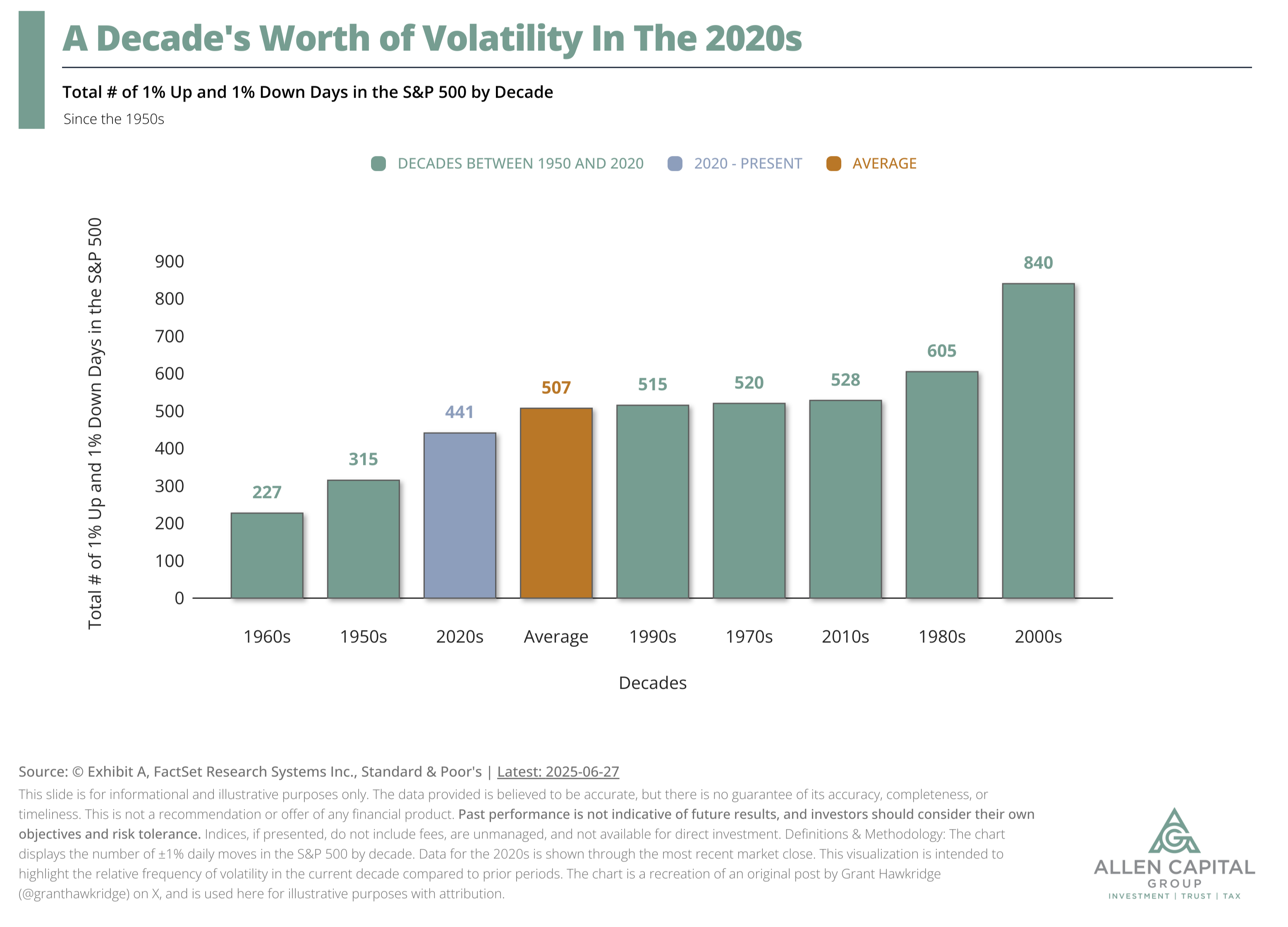
What's strange is that strong returns haven't softened the blows. Investors, notified at every turn by a buzz or a chime, grow weary. The urge to do something—anything—is strong. However, taking action for action's sake often does more harm than good. In their discomfort, many abandon ship just before the winds shift in their favor.
We should obsess over permanent things and care little about temporary things—but more often than not, we get it backward. The temporary steals our attention, while the permanent is left waiting on the porch.
Numbers don't drive markets; people do. And people are prone to wild swings—up one day, down the next, cheerful in the morning, despairing by nightfall. Stir in a heaping dose of technology, and we'd expect investor moods to shift more rapidly in the future, provoking more days with 1% swings higher and dives lower. Price drives narrative, and narrative drives price, so crazy environments will carry on longer than common sense might allow.
We are not machines, and we shouldn't pretend otherwise. Expecting ourselves to be entirely rational is a fool's errand. The best we can hope for is to be reasonable. That begins with a plan—one that fits who you are, what you're aiming for, that doesn't keep you up at night. A good advisor helps you build that plan, but more importantly, helps you develop a mindset that gives you the courage to handle uncertainty. After all, it's never the load that breaks us; it's the way we carry it.