


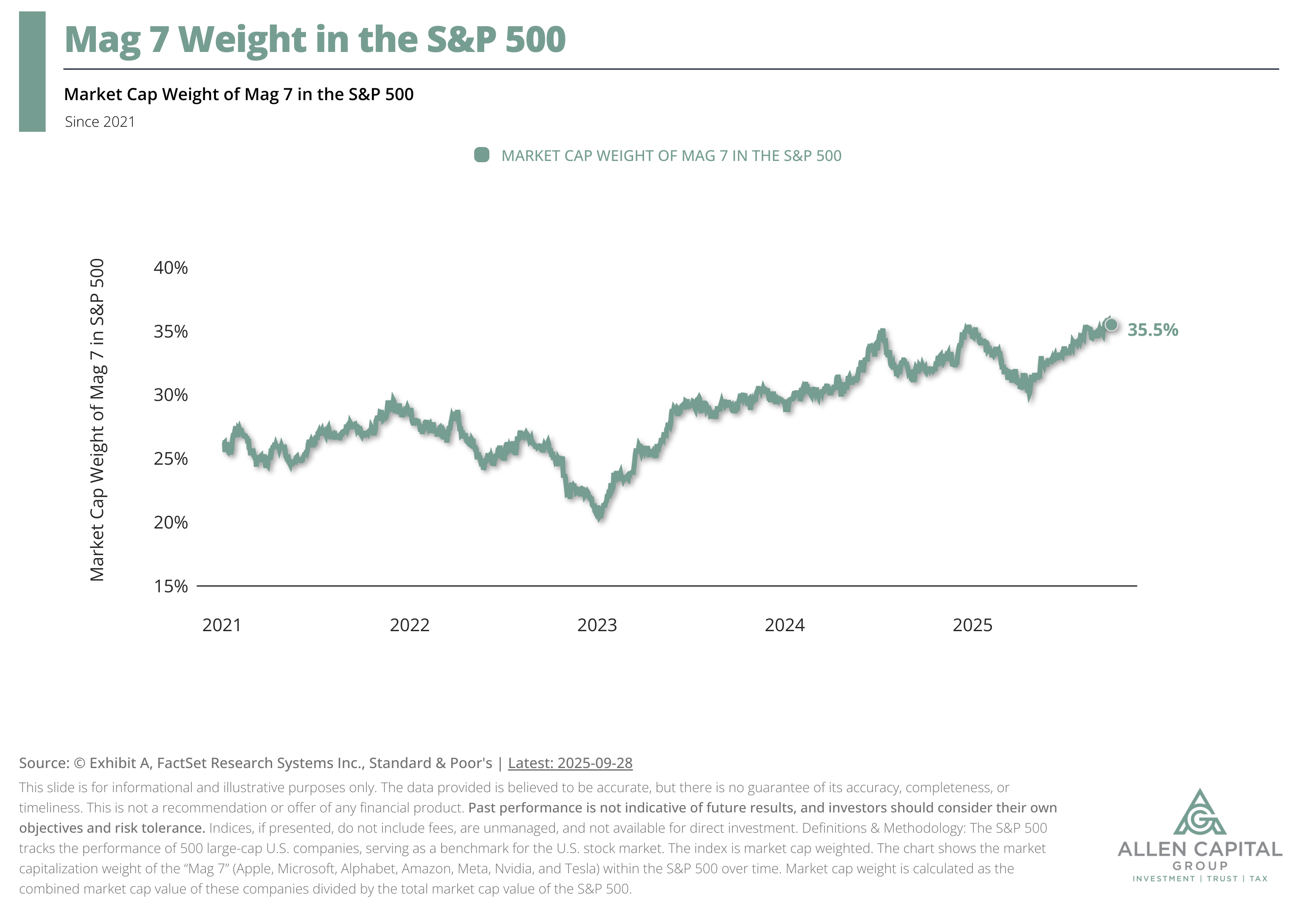
The market is a strange animal. It sprints when it should catch its breath and shrinks when boldness would serve it best. Today, stocks perch at record heights. Seven names—those “Magnificent 7” you hear so much about—make up more than a third of the S&P 500. Never has the index leaned so heavily on so few.
Credit markets reflect a confidence that leaves no room for setbacks. Spreads, from investment-grade to high-yield, remain tight. Meanwhile, the Federal Reserve has begun to ease, even as inflation lingers above its 2% goal—nudged higher by tariffs, immigration limits, and a weakening dollar.
The Fed is on a slippery slope. Loosen policy too quickly, and inflation may remain unfinished business, forcing them to reverse course to reach our 2% target. Hold policy too tight for too long, and the labor market could soften more than necessary. The task ahead is to balance these competing pressures—to honor both sides of the Fed’s mandate without tipping too far in either direction. We hope Chairman Powell has steady hands.
Stocks and bonds alike are priced as if nothing could ever go wrong. But does anyone really believe in perfection? From this high perch, investors walk a familiar tightrope, carefully stepping between two shadows: the risk of losing money and the risk of missing opportunity.
The Risk of Losing Money
The losses that rattle us each month, when we open our statements and see balances rise and fall, are not the ones that matter most. Those are passing storms. The true danger is permanent loss of capital.
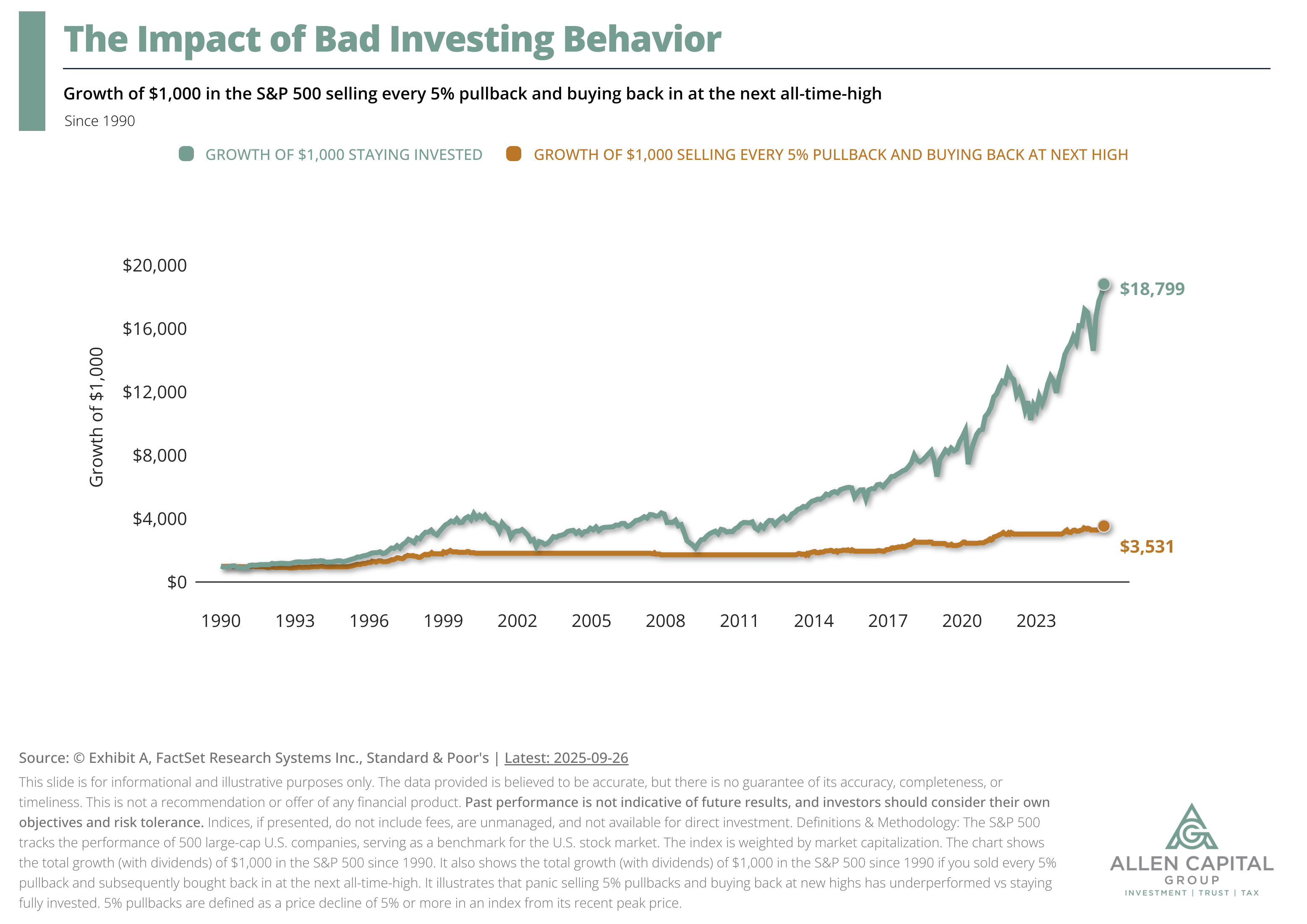
It comes in two forms. The first is selling at the bottom—turning a passing decline into a lasting wound. This often happens when our risk tolerance or time horizon is out of step with our investments. When the mismatch grows too wide, the discomfort of watching losses pile up can push us out—not because the investment was unsound, but because the pain of holding on grew heavier than we could bear.
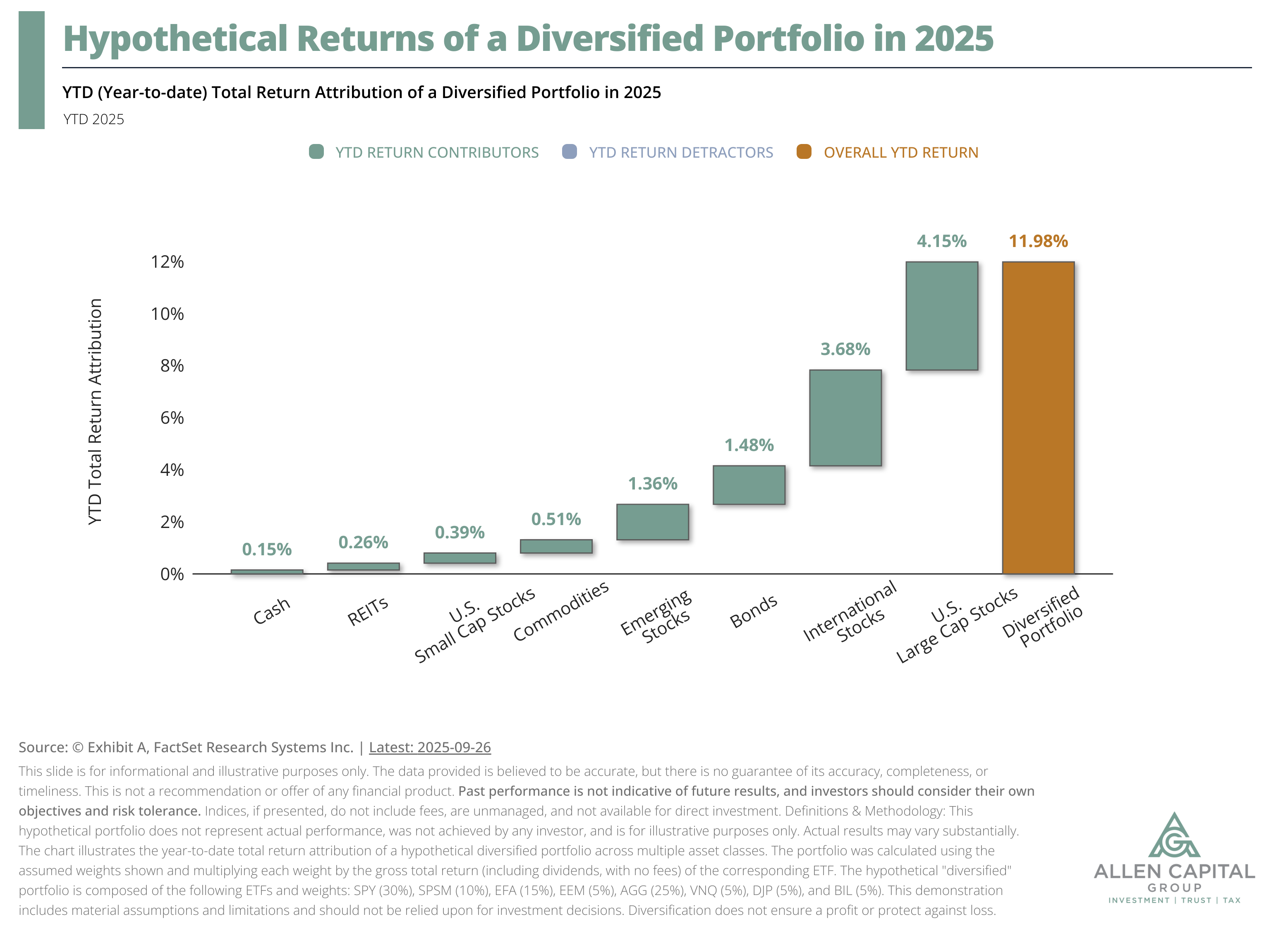
The second is holding a weak investment that never had the strength to recover. A portfolio should not be a grab bag of tips and hunches. It should be a thoughtful collection, with each part chosen to work in symmetry with the others, together pushing in the same direction—toward your goals. As for stock tips from your Uber driver—best to leave those in the back seat.
The Risk of Missing Opportunities
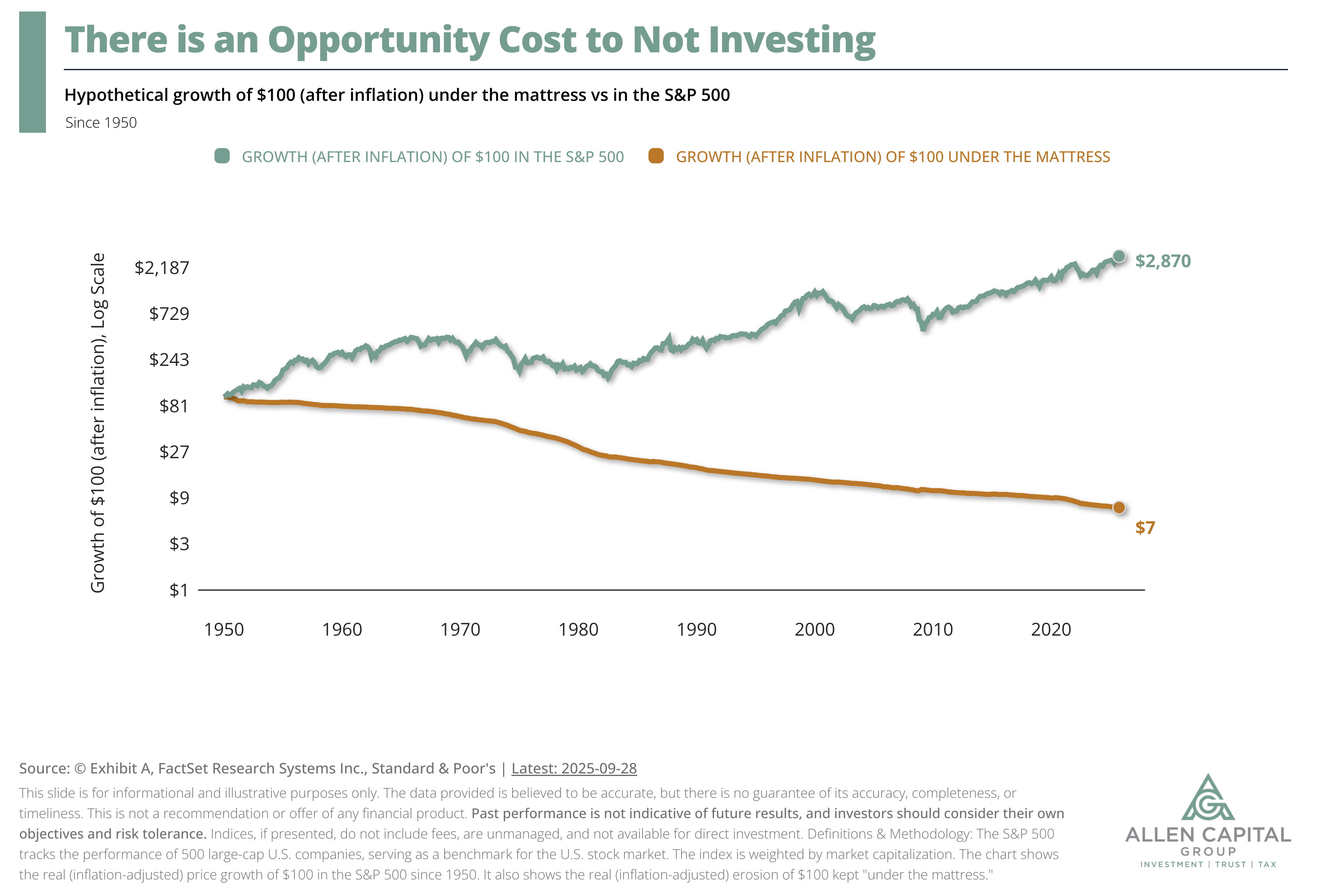
The second risk is quieter, but it bites just the same. To sit idle while markets climb is to feel the ache of absence, while inflation nibbles steadily at your buying power. Caution has its place, but carried too far, it becomes its own hazard. Waiting for skies to clear may earn returns too thin to meet tomorrow’s needs.
Time and again, history shows that bear markets, when fear is thickest, give birth to the brightest gains.
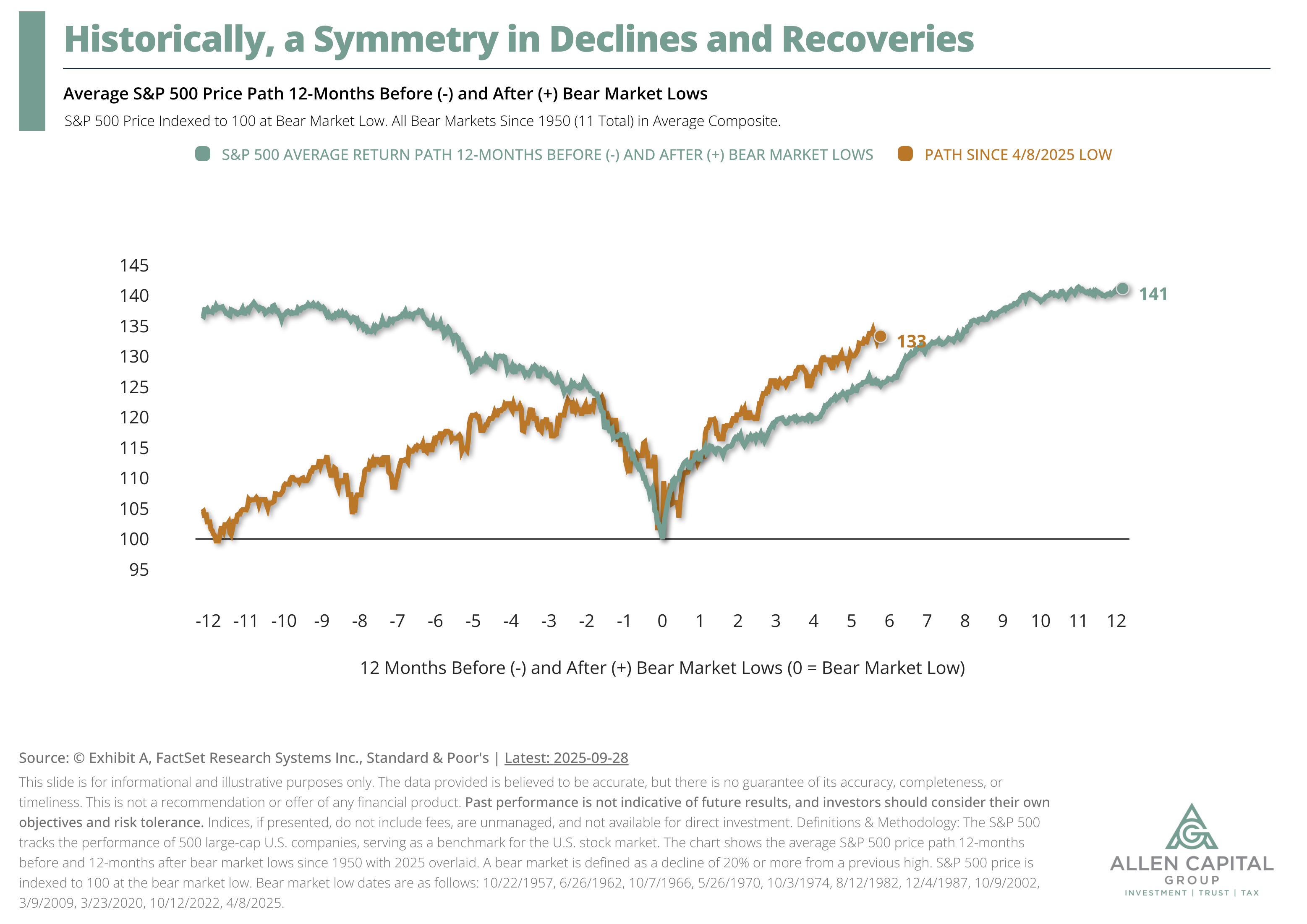
Rate cuts, however ill-timed, grease the gears of speculation. Liquidity has a way of finding prices. And history reminds us: bull markets, once doubted, can grow long and stubborn. For the long-term investor, the urge to avoid risk must be met with resolve. That starts by having a plan. Bucket 1 should be full and healthy. However, safety, left unchecked, drifts into stagnation. And stagnant wealth won’t keep pace—not with the cost of living, not with tuition in Lincoln, not even with the price of a good steak in Omaha.
Balancing the Two
We cannot eliminate both risks—we can only learn to balance them. That balance requires discipline. Caution belongs in seasons of euphoria, when hazards hide beneath the glitter. Boldness belongs in seasons of gloom, when prices are low and fear is thick. Neither comes easily, for both ask us to stand against the crowd.
As investors, we often live in a state of tension between fear and greed, safety and growth. Lean too hard toward caution, and you risk falling behind the rising cost of life. Reach too far for return, and you may suffer wounds that never heal. The wisest course is not to chase perfection but to accept trade-offs, shaping a portfolio that can weather setbacks while still leaning into opportunity. Balance—not bravado, not retreat—turns uncertainty from a menace into a companion on the long road of investing.